
Every buyer wants a lower unit price, but the cheapest parts usually come from the smartest process, not the hardest negotiation. Here are the five mechanisms by which powder metallurgy genuinely removes cost.
1. Material Utilisation Above 90%
A machined steel gear can turn half its raw material into swarf – which you pay for twice: once to buy, once to scrap. Powder metallurgy forms the part to net shape, using 90-97% of the powder. On expensive alloy steels and stainless grades, this alone often covers the difference in unit price.
2. Machining Operations Disappear
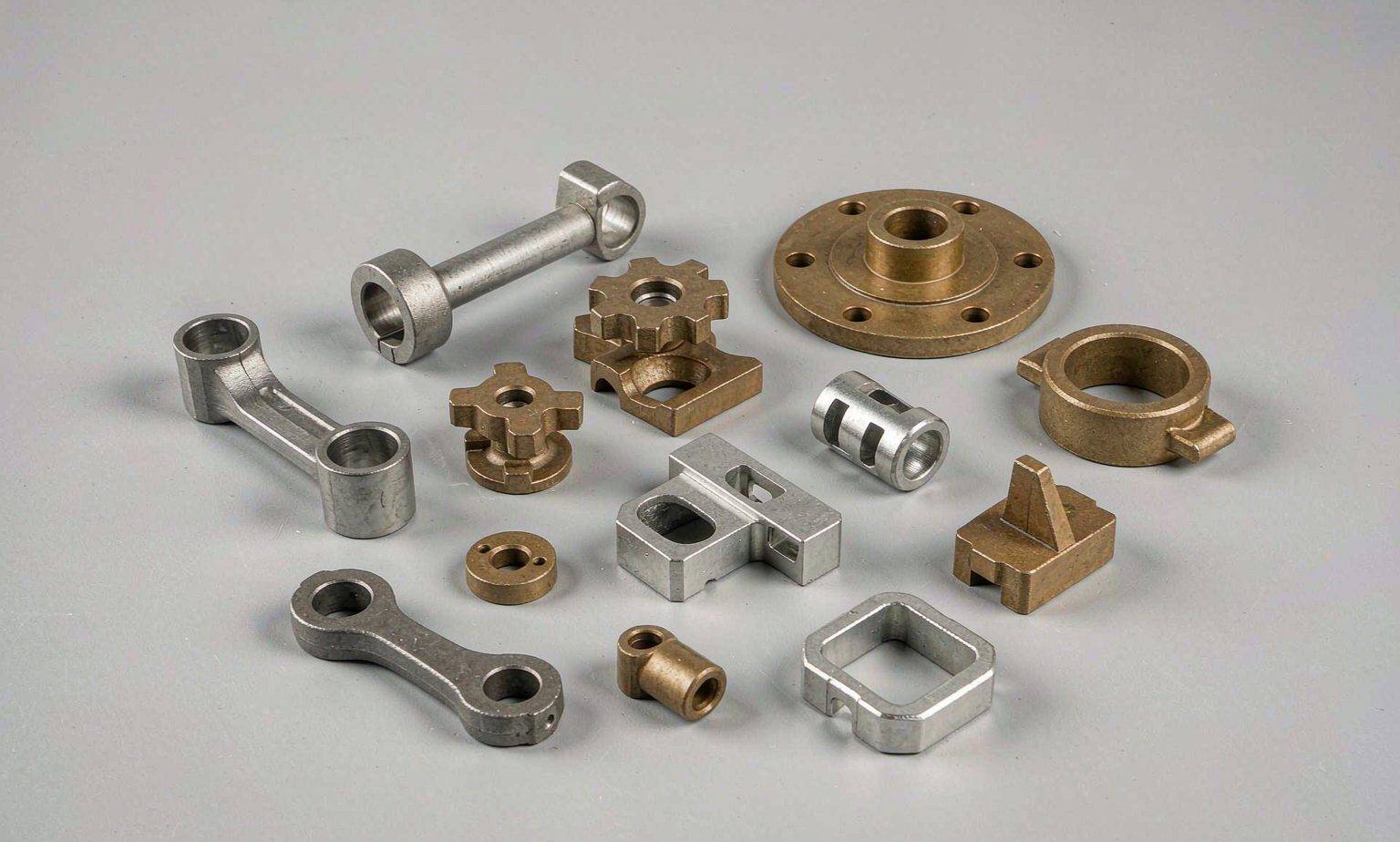
Every feature formed in the die is a feature that never sees a cutting tool. Splines, keyways, oil grooves, flanges, blind pockets, cross-holes and irregular profiles are all free once the tooling exists. A part that needs four machining operations may need one – or none.
3. Parts Consolidation
Two or three machined components joined by welding, brazing or fasteners can often be combined into a single sintered part. The saving is not just in the parts – it is in the joining operation, the inspection, the inventory and the failure modes that disappear with the joints.
4. Built-In Finishing
Steam treatment, oil impregnation and sinter hardening are performed inside the PM process at a fraction of the cost of external plating or coating lines. A steam-treated part gains wear and corrosion resistance without ever leaving the plant.
5. Assembly Simplification
Self-lubricating bushings arrive ready to press in – no grease fitting, no lubrication schedule, no warranty risk from an unlubricated bearing. Captured washers, integral flanges and keyed bores all reduce the number of components your assembly line has to handle.
Put a Number on It
The honest way to evaluate PM is to model the total cost: material, operations, scrap, finishing, assembly and inventory. When we run that exercise with customers, the savings typically land between 20% and 50% for suitable parts.
